Context
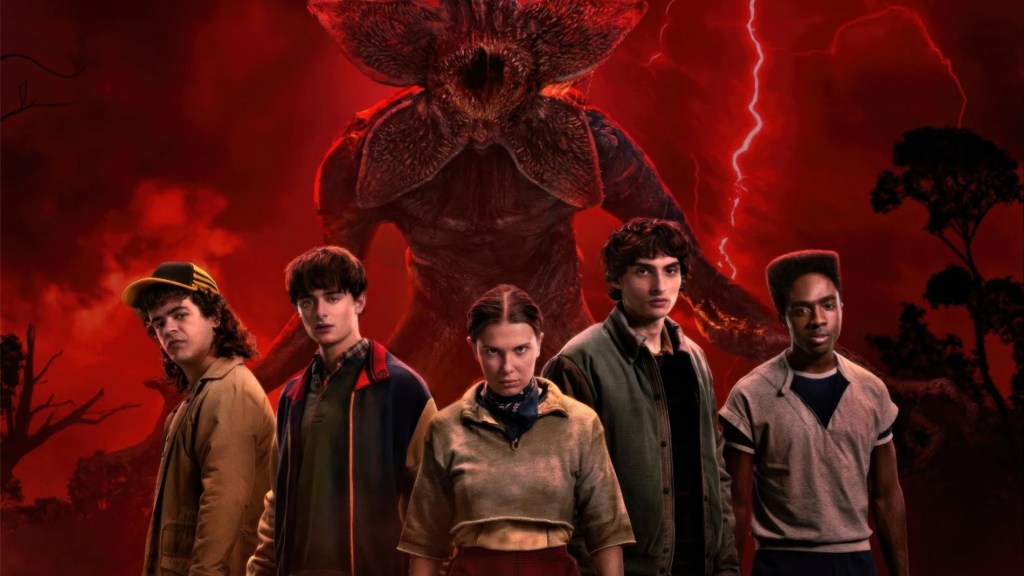
With the Stranger Things finale out there, this feels like a good moment to look back and examine how the series has evolved across its different seasons. I am not going to focus on character arcs or specific subplots. Instead, I want to talk about something that matters a lot to me in every story I consume, whether it is a show, a movie, or a book. I pay very close attention to how power scales are developed and how threats grow or weaken over time. This is especially important in a series that presents clear sides, enemies, and heroes, all of them supposedly evolving in strength and influence as the story moves forward.
Stranger Things and the Promise of Power
Stranger Things began with something special. The early seasons created the feeling that there was a larger world beneath the surface, a world full of mysteries that could grow in scope and danger. The series felt like the beginning of a long campaign, the kind that starts with a torch in a dark corridor and ends with reality shaking apart.
To me, it was the perfect cocktail: Goonies-like adventures, 80s nostalgia, a group of nerdy ass young people, and Dungeons and Dragons. Tons of Dungeons and Dragons references.
The show made a clever choice by using the language and imagery of Dungeons and Dragons. It was more than a fun reference. It was a promise. When you borrow the structure of D&D, you are also borrowing the idea that stories evolve, threats escalate, and characters gain abilities that can reshape everything around them.
At the start, there was genuine tension. A single creature could throw an entire town into chaos. Eleven’s powers felt mysterious and fragile. The Upside Down was an unknown force that seemed capable of becoming something far bigger than anyone expected.
It looked like Stranger Things understood the concept of progression. It looked like the writers were building toward something that would spiral into a full explosion of power and danger, just like a long running tabletop campaign.
That early potential is exactly why the later choices feel so frustrating. The foundation was there. The promise was clear. The show was set up to grow into something massive.
And then it simply did not.
The D&D Framing as an Illusion
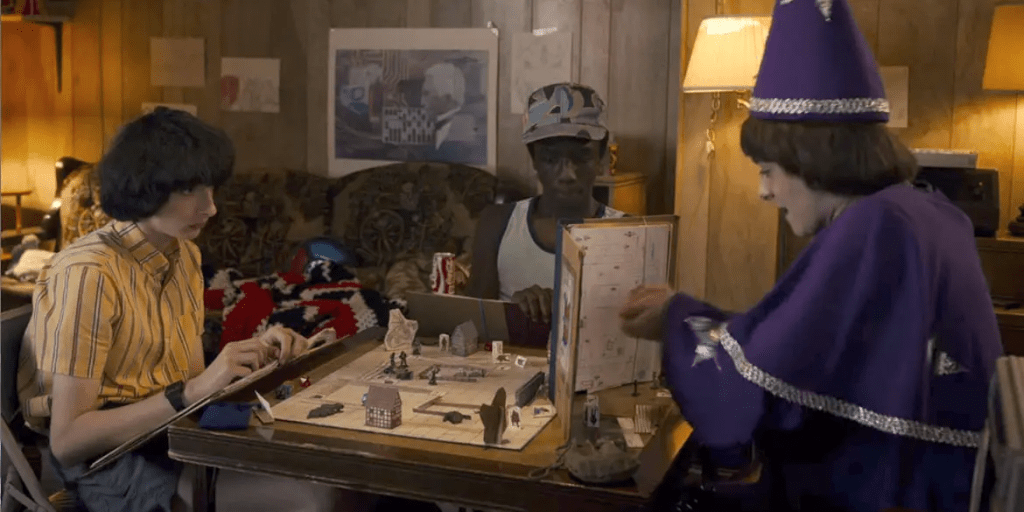
We’ve already stablished that the show makes a powerful stand on Dungeons and Dragons. It builds everything around the language and its identity. It was not just a cute reference. It was a narrative tool, a way to frame the world and its threats. Calling the first creature a Demogorgon created a bridge between the Upside Down and the rule set of a tabletop campaign. It suggested a system behind the chaos. It hinted at a progression of danger and a natural evolution of power on both sides of the conflict.
But, none of that happened.
The Duffer Brothers themselves admitted that their knowledge of Dungeons and Dragons was limited. They mainly used it as a framework for the kids to understand what was happening around them.
And this is the first problem.
The show kept using D&D names and metaphors, but the logic behind them disappeared. The villains did not follow any pattern that matched their supposed classification. The world did not expand in a way that made sense. Eleven did not grow in power as a mage or psionic character naturally would. Her progression stopped, froze and rewound depending on the needs of the season.
And that would be fine. Not everything needs to match D&D stat blocks, because this is not a Dungeons and Dragons show. However, when you use that language, you create expectations for both fans and people who have no idea what a TTRPG even is.
The Dungeons and Dragons references became decoration. They stopped being a guide to understand the hierarchy of threats. They became branding. Instead of a campaign that evolves, Stranger Things turned into a series of disconnected encounters with enemies that did not feel stronger or more meaningful. The illusion of structure slipped away, and with it the promise that the show would honor the system it invoked from the start.
So what happens next is inevitable. Power levels and encounters end up all over the place, and the show creates a new problem it never manages to solve.
Eleven and the Problem of Inconsistent Power
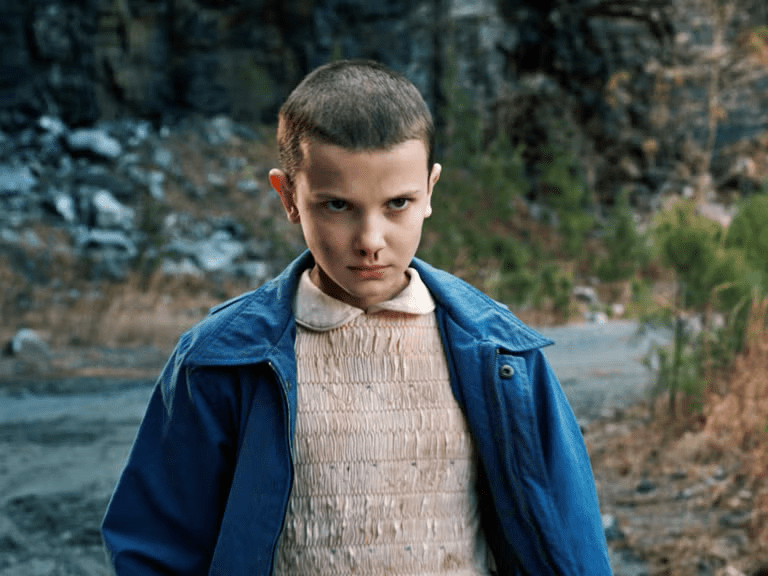
Eleven is the heart of Stranger Things, and that is exactly why the problem with her inconsistent power scaling hurts the story so much. She begins as a mysterious figure with abilities that feel dangerous and unpredictable. Her powers have limits. She bleeds. She collapses. She struggles. This should have been the foundation for a clear progression, the kind you see in a long form fantasy narrative where each level progression unlocks new potential or new consequences.
Instead, her abilities change from episode to episode with no internal logic. Sometimes she can lift a van with one hand. Sometimes she cannot even open a door. Sometimes she fights monsters that should be far beyond human understanding. Other times she cannot handle a basic confrontation. Her power curve is not a curve at all.
The show also uses her power as a reset button. Every time she grows, the story pulls her back. She loses her powers. She regains her powers. She loses them again. She regains them again. None of this growth feels earned because none of it follows a steady path. Books and long form fantasy treat power as something that requires effort, sacrifice or development. In Stranger Things, power is a switch that flips on and off depending on what the writers want to highlight.
And all that make everything weird because there is no sense of threat when she is strong, and no sense of vulnerability when she is weak. Her highs and lows do not come from character development, hey come from convenience. When your most powerful character becomes unpredictable in the wrong way, the entire structure collapses.
Even at this point, you can suspend all expectations here because, you know, “the biz” is at play, and this kind of reset is a common trope in supernatural shows and videogames. Main characters are often weakened so the story can start again. That alone would not be fatal.
Villains Without Teeth
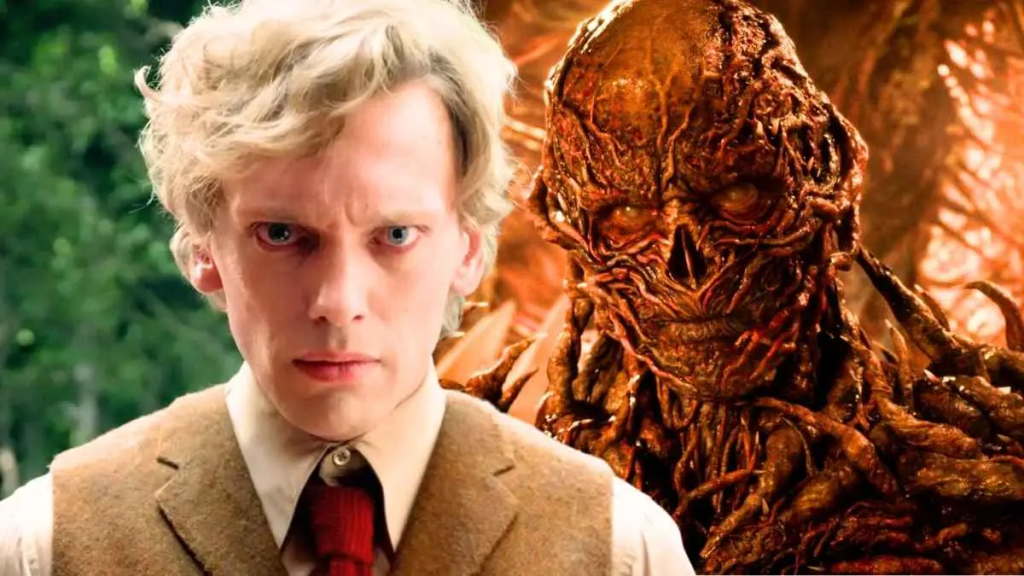
This is where the biggest problem appears.
One of the strongest signs of broken power scaling in Stranger Things is how the villains lose presence as the seasons progress. The show introduces them as overwhelming threats, but they never stay that way. The Demogorgon in the first season is a perfect example. A single creature terrifies an entire town. It destroys trained soldiers, breaks through secure facilities and feels unstoppable. It has weight. It has presence.
In a way, it makes sense that this creature is no longer a menace for the main cast, who “gain experience” and are able to defeat one of them in a 1v1 or plenty of them working as a “party”. The problem is that later seasons reduce that same creature to something close to a minor inconvenience. A Demogorgon becomes a punching bag. It no longer holds the same power or narrative importance. Watching a midlife crisis drunk woman defeat one with a broken bottle feels like a parody of what the show originally delivered.
The same happens with the Demodogs. In the final season, one of these creatures tears apart a group of military personnel in a terrifying way, only for Lucas to kick it aside effortlessly in the very next scene.
And then there is Vecna. The ultimate threat. The main villain. The BBG. Is the BMF of the the group and supposedly threatens the entire world. He cannot even hold a ten year old kid before being kicked away by another ten year old.
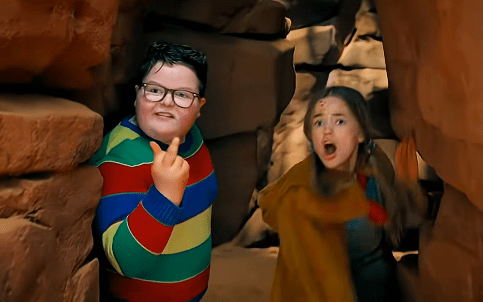
The threat is gone.
The fear is gone.
The scale is gone.
Why This Happens
Stranger Things is not the only show that struggles with power scaling. This problem appears in many productions, and it usually has the same source. Creative teams want to expand the world, raise the stakes and introduce stronger enemies. At the same time, studios want to preserve certain characters, keep the story accessible to a large audience and avoid expensive scenes that require advanced visual effects. These two forces do not work well together.
In this case, there is an additional issue. People with limited creative ability tried to manage something much bigger than themselves, without a deep understanding of the genre they were working in. The show was a massive hit, partly due to luck and perfect timing, and that is fine. The real problem is that they did not know how to handle the promises they made at the very beginning.
Stranger Things could have ended as a cultural phenomenon with a strong first season. Instead, it kept going, growing larger without knowing how to control its own escalation. The result is a story that looks bigger every season, but feels smaller every time it forgets the rules it once established.
 Dice and Chronicles
Leave a comment