
Beyond Swords and Sorcery
When most people hear tabletop role-playing game, their mind immediately jumps to Dungeons & Dragons, and for good reason. It’s the game that defined a genre, inspired generations of storytellers, and brought dice and imagination into the mainstream. But somewhere along the way, D&D became synonymous not just with TTRPGs, but with a single kind of story: high fantasy, medieval kingdoms, and dragons soaring over enchanted mountains.
That’s the paradox of its success. D&D built the house, but now many believe that the house is all there is. The truth is far broader. The world of tabletop role-playing games extends far beyond dungeons, wizards, and elves.
Even within D&D itself, the system can stretch further than people think. The core mechanics (ability checks, narrative collaboration, and progression) are flexible enough to fit any setting or tone. Want to play in a dystopian cyberpunk future? Replace swords with neural implants. Prefer gothic horror? Shift your clerics to vampire hunters and your paladins to broken saints. D&D can become noir, steampunk, post-apocalyptic, or even science fiction with the right tweaks.
And beyond D&D, there’s an entire multiverse of TTRPGs exploring everything from cosmic horror to teenage drama, political intrigue, or introspective storytelling. Systems like Call of Cthulhu, Blades in the Dark, Fate, or Monster of the Week prove that the heart of role-playing isn’t in the setting, it’s in shared imagination.
So yes, D&D is the cornerstone, the reference point everyone knows. But the table is bigger now, and the stories waiting to be told go far beyond Middle-earth’s shadow.
The Legacy of the Dragon
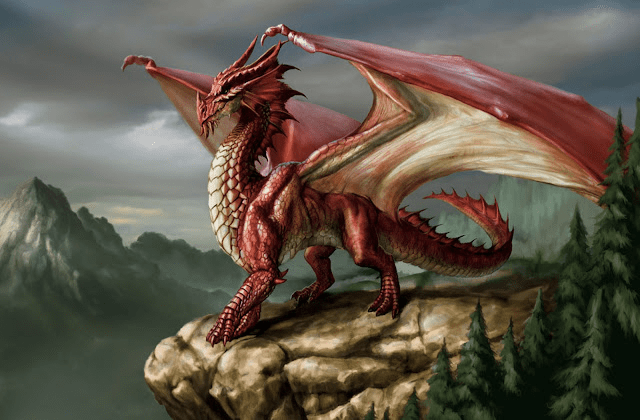
It’s impossible to talk about tabletop role-playing games without acknowledging Dungeons & Dragons as their foundation. Since its creation in 1974 by Gary Gygax and Dave Arneson, D&D didn’t just invent a game, it invented a language. Hit points, classes, levels, alignment, dice mechanics. All of these became part of the DNA of role-playing itself.
For decades, D&D has been the gateway to imagination. Its imagery (wizards with spellbooks, fighters in shining armor, dragons perched atop mountains of gold) shaped how millions of people visualize fantasy. In that sense, D&D became more than a game: it became a cultural shorthand for adventure.
But that success comes with a side effect. The overwhelming popularity of D&D, especially after the explosion of Fifth Edition and its presence in pop culture through shows like Critical Role and Stranger Things, has created a narrative monopoly in the public eye. For many, playing TTRPGs means only playing D&D and fantasy means only Tolkien’s legacy.
That’s not a criticism of D&D, but a reflection of how deeply it has permeated collective imagination. The dragons, the dungeons, the epic quests… they’re iconic. Yet by equating TTRPGs solely with that framework, we risk missing the full creative potential of the medium.
What Gygax and Arneson created wasn’t a single genre, it was a tool for storytelling. The real legacy of D&D isn’t the fantasy setting itself, but the collaborative spirit that allows players to invent entire worlds from a handful of dice and a few sheets of paper. That’s the torch other games, and even new adaptations of D&D itself, continue to carry.
So while the dragon still reigns, the treasure it guards is not just gold. It’s the freedom to imagine differently.
Beyond the Dungeon: Other Worlds, Other Systems

If Dungeons & Dragons is the gateway, what lies beyond the door? An entire universe of games Each one with its own tone, rhythm, and philosophy of play. While D&D thrives on heroic fantasy, dice rolls, and tactical combat, many other TTRPGs take those same tools and point them toward very different emotional landscapes.
Take Call of Cthulhu, for instance. Instead of slaying monsters, you investigate horrors that can’t be slain at all. Victory isn’t about survival; it’s about understanding, and that knowledge comes with a cost: your sanity. It’s a game of mystery and dread, where players learn that sometimes, the bravest choice is to run.
Or look at Vampire: The Masquerade, which trades shining armor for dark suits and moral ambiguity. Here, the monster is you. The game becomes a meditation on hunger, power, and identity, a gothic mirror held up to human nature.
Meanwhile, Blades in the Dark lets you play as a crew of criminals carving out a life in an industrial ghost city. The focus isn’t on dungeons or dragons, but on risk, consequences, and teamwork under pressure. And Monster of the Week, inspired by shows like Buffy the Vampire Slayer or Supernatural, uses simple mechanics to tell episodic stories full of tension, heart, and humor.
These games prove that the tabletop isn’t defined by its setting, but by what you want to explore: fear, love, identity, chaos, friendship, or even silence.
Each system is a different lens. Some sharpen narrative drama, others simulate realism or emotional depth. Together, they expand what “role-playing” means.
So yes, D&D taught us how to roll for initiative, but other games taught us how to roll for heartbreak, mystery, laughter, and loss.
Different Systems, Different Stories — Even Within D&D
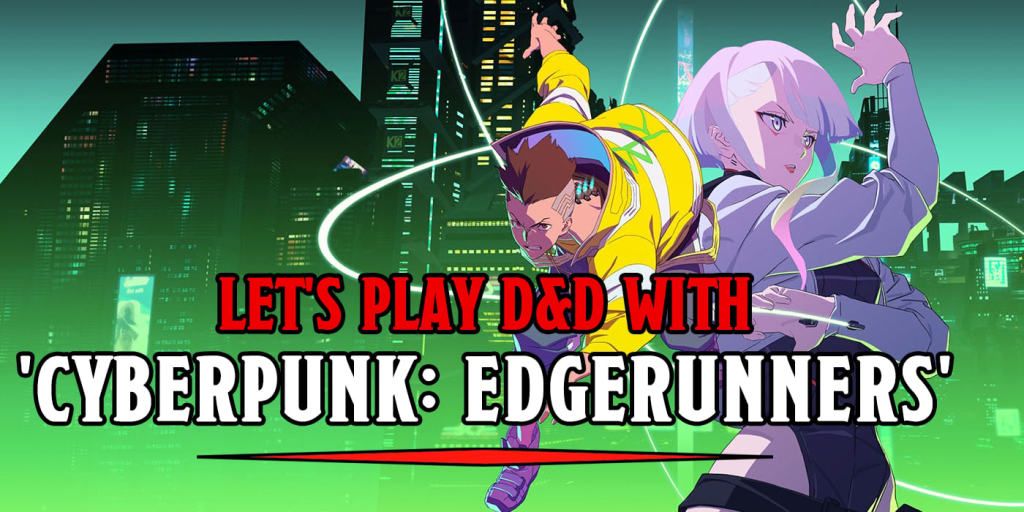
It’s easy to forget that Dungeons & Dragons isn’t limited to castles, goblins, and enchanted forests. The system itself is a storytelling framework, not a genre. What most players call “D&D” is actually just one possible flavor: high fantasy with swords and sorcery. But that’s only one roll on an infinite table.
Over the years, players and Dungeon Masters have reshaped D&D into something far more flexible. Want noir detectives solving magical crimes in the alleys of a cursed metropolis? That’s D&D. Want a steampunk rebellion powered by arcane engines? Still D&D. Want cosmic horror where the heroes lose more than they win? It can do that too.
Because beneath the dragons and the dungeons lies a mechanical skeleton that can hold any story you want to tell. The d20 system rewards creativity and risk-taking. A good Game Master can swap swords for ray guns, or dragons for political intrigue, and the structure still holds.
And Wizards of the Coast itself has proven this adaptability. From the gothic terror of Ravenloft to the futuristic wars of Spelljammer, from the swashbuckling pulp of Eberron to the high-tech ruins of Barrier Peaks, D&D has already dabbled in horror, sci-fi, and even metafiction.
So the real limitation isn’t in the rules; it’s in how narrowly we imagine them.
The same mechanics that decide whether you hit an orc can also decide if your spaceship escapes a black hole, or if your character resists the pull of their own guilt.
If anything, D&D’s strength lies in its adaptability.
The Indie Renaissance: When Stories Became Experiments

While Dungeons & Dragons shaped the foundation, the last two decades have seen a quiet revolution in tabletop design. A movement led not by big publishers, but by small, passionate creators redefining what it means to play. This indie renaissance turned TTRPGs from combat simulators into tools for emotion, introspection, and collaboration.
Games like Fate or Powered by the Apocalypse opened the floodgates by simplifying mechanics and putting the narrative directly into players’ hands. Instead of rolling to hit, you roll to see how the story twists. Success and failure aren’t binary; they’re shades of consequence.
Blades in the Dark with its focus on heists and tension, Kids on Bikes capturing 80s nostalgia and coming-of-age wonder, and Mothership turning existential dread into a dice mechanic. Some, like The Quiet Year, barely use dice at all, replacing combat with collective worldbuilding.
And others dive straight into emotion: Bluebeard’s Bride explores fear and identity through gothic symbolism; Alice is Missing tells its story entirely through text messages; Thirsty Sword Lesbians celebrates love, acceptance, and queer joy through swashbuckling drama.
Each of these games shows that role-playing isn’t about what you fight, but what you feel. They broke free from the expectation that every campaign needs combat, loot, or even victory. Instead, they focus on stories about loss, discovery, and connection. The kinds of tales that live quietly in the heart long after the dice have stopped rolling.
Why It Matters
At first glance, talking about dice mechanics and different systems might sound like niche hobby talk, but it’s much more than that. The diversity of tabletop role-playing games is a reflection of how human imagination itself has evolved. When we say that TTRPG doesn’t just mean Dungeons & Dragons, what we’re really saying is that there’s no single way to tell a story, or to live one.
Each system, each table, each world encourages a different form of self-expression. Some players thrive on strategy and numbers; others on character arcs and emotion. Some want to fight gods, others want to heal relationships. And all of it is valid.
Recognizing the variety of TTRPGs matters because it opens the door for inclusivity and accessibility. Games with simpler mechanics or narrative focus invite new players who might find D&D intimidating. Systems built around collaboration or emotion can create safer spaces for people who need a gentler kind of adventure. The more games exist, the more people can find a table where they feel they belong.
It also changes how we think about storytelling itself. D&D taught us that we could be heroes. Indie and alternative systems remind us that we can also be poets, detectives, ghosts, lovers, monsters or just people trying to make sense of a broken world. Together, they broaden the emotional palette of play.
Ultimately, expanding beyond D&D doesn’t mean rejecting it. It means honoring what it started: a collective act of imagination that no longer fits inside a single book or genre. The dragon opened the door, but we’re the ones who decided to explore what lay beyond it.
 Dice and Chronicles
Leave a comment