
Rolling for healing
Once upon a time, tabletop role-playing games were seen as escapism, a way to disconnect from reality and spend hours slaying dragons, deciphering runes, or exploring dungeons with friends. But as psychology has evolved, so has our understanding of what “escape” really means. Sometimes, stepping into another world isn’t about running away; it’s about finding new ways to return to ourselves.
In recent years, researchers and therapists have started to look at TTRPGs as powerful therapeutic tools. According to the American Psychological Association (APA), structured role-playing sessions can help individuals, especially those with ADHD, autism, or social anxiety, develop attention, empathy, and communication skills in a supportive and imaginative context. I’m not the one saying this. Far smarter people than me have studied it: https://www.apa.org/monitor/2025/04-05/role-playing-games-therapy
The magic lies in the table itself: a circle of players, a shared story, and a world where everyone has a voice. In that environment, people who often struggle with focus, expression, or connection can experiment freely. The dice provide structure; the imagination provides freedom. Together, they create something close to therapy, but disguised as play.
Far from being “just a game,” TTRPGs have become a bridge between fantasy and mental health, blending storytelling, collaboration, and psychology. What was once a hobby for dreamers is now finding its place in clinics, classrooms, and therapy groups.
The Therapeutic Power of Play
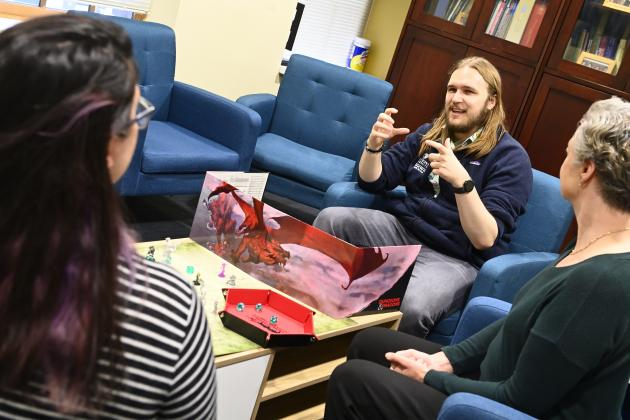
Play has always been a form of learning. From childhood games to adult hobbies, play gives shape to imagination and structure to emotion. In therapy, this principle becomes deeply powerful and that’s where tabletop role-playing games (TTRPGs) shine.
Unlike other forms of therapy, TTRPGs combine storytelling, structure, and social connection. Each session provides a balance between freedom and rules: the Dungeon Master (or Game Master) guides the world, but the players decide how to move through it. That framework allows people to experiment safely, to take risks, to fail, and to try again. All within the limits of imagination.
For individuals with ADHD or autism, this structure is not a constraint but a lifeline. The clear turn-taking system, the predictability of sessions, and the cooperative nature of the game all help create a controlled environment where focus can flourish. The dice rolls, objectives, and quests provide a sense of progression and reward that mirrors the small victories of cognitive or behavioral therapy.
At the same time, the story invites creativity. Players can express emotions, test boundaries, and practice social interaction without fear of real-world consequences. A shy participant can play a charismatic bard; someone who struggles with impulsivity can learn to pause before taking action. Every character decision becomes a small rehearsal for life outside the table.
In short, TTRPGs turn therapy into adventure. They transform the sometimes intimidating process of self-improvement into a collaborative story, where every challenge is shared and every success (no matter how small) earns a celebration. It’s healing through imagination, structured by rules but fueled by empathy.
Focus, Flexibility, and Executive Function (ADHD)

For many people living with Attention-Deficit/Hyperactivity Disorder (ADHD), focus isn’t just a matter of willpower; it’s a battle between interest and distraction. Traditional settings often punish that struggle, labeling restlessness as a flaw. But at the gaming table, that same energy can become a strength.
TTRPGs work because they speak the brain’s native language of engagement, feedback, and imagination. Every dice roll creates a burst of anticipation, every turn requires active listening, and every story twist demands quick thinking. Players aren’t passively receiving information since they’re participating in it. The narrative hooks attention naturally, turning what feels like a chore in daily life into something intrinsically motivating.
Beyond focus, these games help train executive function, the set of mental processes that manage planning, prioritization, and impulse control. A session of Dungeons & Dragons or Pathfinder constantly demands micro-decisions: Should I attack or heal? Who needs my help first? What resources do I have left? Those choices mirror the cognitive flexibility that people with ADHD often find difficult in real-world contexts.
The turn-based structure also fosters self-regulation. Waiting for one’s turn, respecting others’ spotlight moments, and considering consequences before acting are all part of the experience. Over time, players internalize these habits. Not because they’re forced to, but because the story rewards them.
Finally, the positive feedback loop of gaming. Small wins, visible progress, and collaborative success reinforces focus and motivation. When players see their actions matter, attention becomes less of a demand and more of a natural response.
Safe Exploration of Identity and Emotion

One of the most powerful aspects of tabletop role-playing games is that they allow us to step outside ourselves, and, paradoxically, get closer to who we really are.
At the table, behind a character sheet and a handful of dice, players are free to explore thoughts, emotions, and versions of themselves that might be too fragile to express in daily life.
A role-playing session creates a protective layer of fiction, a kind of emotional armor. The character becomes a proxy, a voice through which players can process fear, anger, grief, or joy without feeling exposed. When a shy player chooses to be a bold warrior, or someone struggling with anxiety speaks as a confident leader, they are not pretending; they are rehearsing. Each line of dialogue, each choice, becomes a small act of emotional experimentation.
This dynamic is particularly valuable in therapeutic contexts. Many therapists who use TTRPGs report that clients can articulate difficult emotions more easily through their characters. A player might not say, “I’m afraid of being rejected,” but their character might fear losing the trust of their companions. That translation (from reality to narrative) opens doors that direct conversation sometimes cannot.
Role-playing also provides space for identity exploration. People questioning aspects of who they are (gender, values, relationships, purpose) can use their characters as mirrors, or as masks, to test how those identities feel in action. Within the safety of the story, failure is temporary and vulnerability becomes creative.
Ultimately, the table becomes a microcosm of emotional growth. It’s a space where sadness can coexist with laughter, and self-discovery happens through shared imagination. In a world where vulnerability often feels dangerous, TTRPGs remind us that pretending can be a path to truth.
The Community Effect: Belonging and Resilience
Mental health often thrives in the space between people. For individuals who feel isolated, misunderstood, or out of sync with the world, the simple act of sitting around a table and being part of a story can be profoundly healing.
TTRPGs build what many clinical models struggle to replicate: authentic connection. Players laugh, argue, make decisions, share victories, and face loss together. Over time, those shared moments form bonds that go beyond the game itself. The table becomes a small ecosystem of trust, a miniature world where you matter, where your presence has impact, and where your voice contributes to something bigger than yourself.
For people dealing with anxiety, depression, ADHD, or autism, this sense of belonging is no small thing. The weekly rhythm of sessions creates stability; the group’s continuity fosters accountability and support. Someone who might withdraw from social contact in other contexts learns that connection can feel safe, even rewarding.
Community also strengthens resilience. Campaigns are full of setbacks; plans fail, characters fall, the dice betray you, yet the group continues. That shared persistence mirrors what therapists call adaptive coping: the ability to face challenges collectively rather than alone. Within the fiction of the adventure, players practice real-world perseverance.
The APA notes that one of the key therapeutic benefits of TTRPGs lies in this collaborative structure: success depends on empathy, patience, and teamwork, not dominance or competition. Everyone’s contribution matters. Even silence can be a role.
And when the session ends, that sense of connection often lingers. A reminder that belonging doesn’t have to be earned; it can be built, one story at a time.
Conclusion: Healing Through Imagination
When people talk about tabletop role-playing games, they often focus on the fantasy, the dragons, the quests, the magic. But beneath all that wonder lies something far more real: human connection through shared imagination.
The therapeutic power of TTRPGs doesn’t come from the dice or the rules. It comes from what happens when people gather, listen, and build something together. Within the safety of the story, players can experiment with courage, empathy, patience, and hope. They can practice being the versions of themselves they aspire to become and be seen, accepted, and supported in the process.
For those navigating ADHD, autism, anxiety, or other mental health challenges, the table offers a kind of equilibrium the world often fails to provide. It’s structured, yet open; social, yet forgiving. It rewards attention, collaboration, and imagination.Tthe very skills that everyday life can make feel inaccessible or undervalued.
And perhaps that’s the quiet brilliance of role-playing games: they transform healing into a story, and the story into a mirror. You roll the dice, make a choice, and learn. Not only about the character on your sheet, but about the person holding it.
In a sense, the game never really ends. Every laugh, every critical success, every defeat shared with friends becomes part of a much larger campaign: the lifelong adventure of becoming whole.
 Dice and Chronicles
Leave a comment