

Introduction
Welcome to A Character Study, a series where we take a closer look at some of the most memorable (and divisive) characters in books and television. Our goal is not only to celebrate the successes of character writing, but also to dissect the failures. The moments when narrative intention and narrative execution drift apart.
And what better place to begin than with Xander Harris, one of the most puzzling figures in Buffy the Vampire Slayer. Within the show, he is consistently elevated as “the heart” of the Scooby Gang: the grounding human presence, the comic relief, the voice of reason in a world of vampires, witches, and slayers. At least, that’s the theory.
The reality is far messier. Across seven seasons, Xander often proves himself to be jealous, insecure, judgmental, and, at times, outright toxic. His words wound more than his fists ever could. And yet, rather than being forced to reckon with these flaws, the narrative bends itself to excuse him, reward him, and position him as an indispensable pillar of the group.
Buffy the Vampire Slayer gave us a world full of monsters, but one of its most dangerous ones never had fangs.
Season 1: The Comic Relief with Jealous Tendencies

In the early days of Buffy the Vampire Slayer, Xander is introduced as the quintessential “normal guy.” Surrounded by a Slayer, a witch-in-training, and a Watcher, his purpose is clear: to be the comic relief, the audience’s lens, and the grounding reminder that not everyone in Sunnydale comes equipped with mystical powers.
At first glance, this role feels necessary. Every great ensemble benefits from a character who can undercut the drama with humor, who can ask the questions viewers at home might be thinking, who can remind us of the human scale of the supernatural. In theory, Xander was meant to be that anchor.
But even in Season 1, cracks begin to show. Xander’s jokes frequently mask a deep insecurity. Particularly when it comes to Buffy’s attention. His attraction to her is framed as endearing, even noble, but it quickly sours into jealousy once Angel enters the picture. His disdain for Angel isn’t just rooted in the vampire’s mysterious past; it’s born from envy, and it colors every interaction between them.
What’s most striking is how early the toxic pattern begins. Xander’s insecurities aren’t explored as flaws to be overcome; they’re disguised as harmless crushes and witty quips. His inability to accept Buffy’s lack of romantic interest in him sets the stage for a recurring theme throughout the series: Xander lashing out at others when he doesn’t get what he wants, while the narrative cushions him from facing the consequences.
Season 1 positions him as the “everyman,” but beneath the jokes and awkward charm is the blueprint of a character whose immaturity will only grow more damaging as the show progresses.
Season 2: Jealousy Turns into Bitterness

If Season 1 hinted at Xander’s jealousy, Season 2 brings it into full view. With Buffy and Angel’s relationship deepening, Xander’s insecurities no longer hide behind awkward jokes; they harden into open hostility. His disdain for Angel escalates beyond teenage rivalry into a constant undercurrent of bitterness, one that often manifests as cruel remarks and a refusal to acknowledge Buffy’s agency in her own choices.
This season also marks Xander’s most infamous betrayal: Becoming, Part Two. As Willow fights for her life in the hospital, she resolves to perform a spell to restore Angel’s soul. She entrusts Xander to pass a crucial message to Buffy, that help is coming, that Angel might be saved. Instead, Xander withholds the truth. He tells Buffy only to “kick his ass.” The result? Buffy confronts Angel prepared to kill him, rather than to hold out hope that her friend’s spell could succeed.
It’s a staggering moment, one that should redefine Xander as a character. He deliberately sabotages both his best friend and the Slayer he claims to love, all out of spite and jealousy. In any coherent narrative, this would have lasting consequences, tension within the group, a reckoning with his own pettiness, perhaps even a rift that takes seasons to heal.
But Buffy does none of this. The act is brushed aside almost immediately, and Xander faces no fallout from his deception. Buffy never learns what he did. Willow never confronts him. The audience is asked to forget, to treat the betrayal as if it never happened. And just like that, one of the ugliest choices in the series is swept under the rug.
Season 2 should have been the breaking point for Xander Harris. Instead, it becomes the blueprint for how the show will continue to treat him: a character allowed to inflict damage without ever being forced to reckon with the consequences. His jealousy doesn’t just stay with him, it poisons the group dynamic, while the narrative quietly looks the other way.
Season 3: Standing Still while Others Grow

By the time Buffy reaches its third season, most of the main characters are undergoing clear growth. Buffy faces the weight of responsibility and her fractured sense of identity after killing Angel. Willow begins to step into her magical potential, moving from shy bookworm to a figure of real agency. Even Cordelia, often dismissed as comic relief, shows sparks of independence and depth.
Xander, however, remains stuck in the same place he began: the immature adolescent who resents being left behind. His arc doesn’t evolve, it calcifies. While his friends mature through trauma, love, and self-discovery, Xander continues to lean on sarcasm and jealousy as his only traits.
The clearest example is The Zeppo, an episode that ostensibly gives him center stage. On the surface, it looks like a turning point: Xander embarks on his own adventure, separate from the main crisis, and supposedly learns that he doesn’t need to be a Slayer, witch, or Watcher to have value. Yet the resolution rings hollow. Xander doesn’t gain confidence or growth through genuine action, he survives through luck, circumstance, and narrative decree. He’s declared “special” not because of anything he truly does, but because the script insists that he is.
The episode ends with a smug secret: Xander knows he saved the day, but chooses not to tell the others. This is framed as maturity, but in practice it’s another way of insulating him from accountability. He remains insecure, still measuring his worth against the power of others, yet the story presents him as if he’s achieved some profound revelation.
In reality, nothing changes. Buffy continues to grapple with sacrifice, Willow with power, Giles with duty. Xander, meanwhile, is frozen in place, given a false sense of significance without ever earning it. Season 3 exposes the core problem of his character: while everyone else grows, Xander stays static and the narrative insists on treating that stagnation as depth.
Season 4: The Outsider of His Own Making
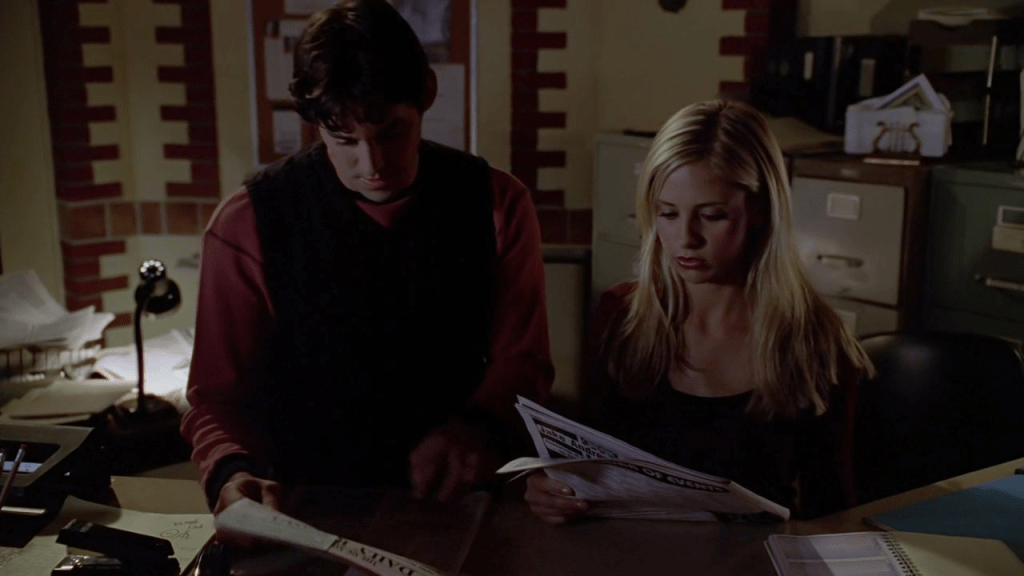
Graduation is supposed to be a moment of transformation. For Buffy and Willow, it is exactly that: Buffy steps into adulthood burdened with both independence and destiny, while Willow dives into college life and begins to deepen her magical studies. Both characters evolve in ways that reflect the natural turbulence of early adulthood, uncertainty, growth, and discovery.
Xander, on the other hand, stagnates. Rather than facing a meaningful arc about life beyond high school, he becomes the perennial outsider. Living in his parents’ basement, unemployed, and without direction, he’s framed as a kind of lovable loser. The problem is that the show treats his situation less as a consequence of his immaturity and more as a running gag. His lack of ambition, his failure to carve out an identity beyond “the normal guy,” is never interrogated with the same seriousness as Buffy’s or Willow’s struggles.
The contrast is striking. While Buffy wrestles with balancing college life and Slayer duties, and Willow discovers both love and power in her relationship with Tara, Xander drifts aimlessly. His inertia isn’t portrayed as tragic or troubling, but as quirky, another excuse for him to quip from the sidelines. The narrative shields him from real consequences, turning what should be a sobering look at arrested development into a series of punchlines.
Season 4 should have been the perfect opportunity to let Xander grow. Removed from the structure of high school, he could have found a career path, confronted his insecurities, or even explored what it truly means to be powerless in a world of demons. Instead, he becomes a parasite by choice: feeding off the group dynamic, offering little in return, while the story cushions him with humor.
In a season defined by transition (Buffy and Willow moving forward, Giles redefining his role, even Spike being reimagined) Xander is the only one who refuses to evolve. And rather than address this stagnation, the narrative turns it into a joke, preserving him in the amber of immaturity.
Season 5: Pretending to Mature

Season 5 introduces what, at first glance, appears to be genuine progress for Xander Harris: his relationship with Anya. After seasons of insecurity and jealousy, settling into a committed partnership could have been the catalyst for real growth. Anya’s bluntness and direct perspective often challenge the Scooby Gang, and pairing her with Xander has the potential to highlight his strengths,loyalty, humor, and resilience, while forcing him to confront his flaws.
But the promise of maturity never materializes. Instead, Xander uses the relationship less as a path toward growth and more as a shield. Anya becomes a prop that validates his fragile ego: she desires him, she prioritizes him, she grounds him in a way that conveniently excuses his lack of self-reflection. Far from becoming a true partner, Xander treats Anya as proof that he has “made it”, a girlfriend as evidence of his stability, even when that stability doesn’t exist.
His cruelty surfaces in subtle but telling ways. He belittles Anya’s attempts to integrate into human life, mocks her literal honesty, and often uses her as the butt of jokes. These behaviors aren’t framed as harmful, but as comedic quirks, once again the narrative cushions Xander from accountability. While Buffy grapples with the crushing responsibility of Dawn’s arrival and Willow pushes deeper into her magical potential, Xander remains the same boy cloaked in the illusion of adulthood.
What’s most troubling is that Season 5 begins the narrative shift toward mythologizing him as “the heart of the group.” In The Replacement, when he confronts a literal double of himself, the show tries to position his struggle as one of identity and self-worth, suggesting that Xander has finally accepted who he is. Yet this supposed growth is superficial: it doesn’t change his toxic patterns, nor does it alter his role within the group. Instead, it plants the seed for the false redemption that will be fully realized in later seasons.
Season 5 wants us to believe that Xander has matured, but beneath the surface he remains as insecure, petty, and self-serving as ever. The difference now is that the narrative begins to reward him for it, paving the way for the dissonance that defines his role in the final years of the series.
Season 6: The Most Damaging Season

If earlier seasons hinted at Xander’s immaturity, Season 6 strips away all illusions. This is the year in which his selfishness and hypocrisy are laid bare, and yet, paradoxically, the narrative continues to treat him as a moral compass.
The culmination of his toxic patterns arrives in Hell’s Bells. After seasons of leaning on Anya as a symbol of his “growth,” Xander abandons her at the altar. The episode frames his cold feet as the result of fear and insecurity, sympathetic qualities, perhaps, if not for the devastating cruelty of the act. He humiliates Anya in front of their friends, robs her of the life she had built around this commitment, and dismantles their relationship in a single moment of cowardice. Yet the fallout is curiously one-sided: Anya is devastated, forced to rebuild, while Xander continues on largely unscathed. His friends comfort him, excuse him, and move forward, as if deserting his fiancée in public were a forgivable blunder instead of an unforgivable betrayal.
Worse still is how he positions himself throughout the season as the moral judge of others. He is harshly critical of Buffy’s relationship with Spike, dismissing her choices as reckless and degrading, despite the fact that Buffy is navigating trauma, depression, and a complicated web of emotions. He chastises Willow’s increasing reliance on magic, as though her addiction were nothing more than irresponsibility. Yet in both cases, Xander offers no empathy, no self-awareness, and certainly no solutions. Only condemnation.
This judgmental streak would be easier to accept if Xander himself were held to the same standard. But the show repeatedly exempts him from the consequences that befall his friends. Buffy is punished for her choices, Willow is consumed by hers, Anya reverts to vengeance when abandoned. Xander, by contrast, is allowed to stand above it all, as though his hypocrisy were invisible to everyone except the audience.
Season 6 is often remembered as the darkest chapter of Buffy the Vampire Slayer, a story about grief, trauma, and destructive choices. Yet in that darkness, Xander is framed as “the voice of reason,” the stabilizing influence, the so-called heart of the group. The irony is stark: the character most defined by insecurity and selfishness is elevated as the one who sees clearly. In reality, he embodies the very hypocrisy and lack of accountability that the season otherwise seeks to critique.
Season 7: The False Payoff
By the final season of Buffy the Vampire Slayer, one might expect Xander Harris to finally confront the weight of his choices. After years of jealousy, hypocrisy, and betrayal, Season 7 should have been the moment where his flaws came home to roost, forcing him to reckon with the damage he’s caused. Instead, the narrative grants him something far stranger: an unearned redemption.
This supposed maturity crystallizes most clearly in his speech to Dawn in Potential. Here, Xander acknowledges that he lacks the powers and destiny of those around him, but claims that his role is to see what others cannot. It’s framed as a touching moment, an expression of humility and wisdom from the character who has stood in the shadows all along. Fans often cite it as his breakthrough, the moment where Xander accepts himself for who he truly is.
But viewed against the full arc of the series, the speech is hollow. For seven seasons, Xander has proven time and again that he does not see clearly: he misjudges, he projects, he lashes out, and he manipulates. His supposed insight is contradicted by his actions: from sabotaging Buffy’s relationship with Angel, to abandoning Anya, to condemning Buffy and Willow for their struggles while evading accountability for his own. The idea that Xander has always “seen” what others cannot is less revelation than revisionism.
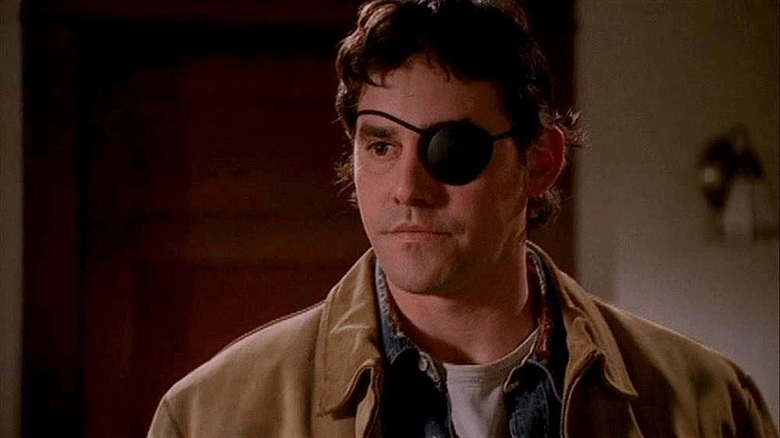
Even his literal loss of an eye, an injury that could have symbolized the blindness of his past, fails to prompt any meaningful change. Instead, it becomes a badge of honor, further cementing his status as the steadfast “heart” of the group. What should have been a humbling moment is transformed into yet another excuse to valorize him.
Season 7 doesn’t punish Xander, nor does it hold him accountable. It elevates him. After years of selfishness and toxicity, he is rewarded with the role of moral anchor, as though the narrative itself is determined to rewrite his history. While Buffy, Willow, and even Spike must grapple with the consequences of their choices, Xander is handed a false payoff: the illusion of growth without the journey to earn it.
In the end, Xander Harris exits Buffy the Vampire Slayer not as the flawed character he truly is, but as the story’s misplaced ideal of loyalty and perspective. The so-called “one who sees” spent seven seasons proving the opposite, and the fact that the narrative refuses to acknowledge this is the clearest indictment of his character.
The Illusion of Growth

Looking back over seven seasons, the truth about Xander Harris becomes clear: he does not grow. His insecurities, his jealousy, and his hypocrisy remain constant from beginning to end. What changes is not the character, but the narrative’s treatment of him.
Each time Xander makes a destructive choice, the show cushions him from real fallout. Betraying Buffy and Willow in Season 2? Forgotten. Mocking and diminishing Anya throughout their relationship, only to abandon her at the altar in Season 6? Excused. Passing judgment on Buffy and Willow for their darkest struggles while avoiding any examination of his own? Ignored. Time and again, the consequences of his actions are shifted onto others. Anya suffers. Buffy suffers. Willow suffers. Xander, somehow, never does.
And yet, the narrative steadily elevates him. What begins as the insecure comic relief transforms, by Season 7, into the group’s supposed moral anchor, the “one who sees,” the “heart” of the Scoobies. But this role is not earned through any real development. It is a construction, imposed by the script rather than built through authentic growth. Xander does not evolve into the heart of the group; the show simply declares him to be so.
The result is a character arc that exists in illusion only. The audience is told to believe in Xander’s importance, while every on-screen action reveals his toxicity. His supposed growth is not organic, but manufactured, a narrative sleight of hand that asks us to forget his history in order to accept his final role.
Conclusion

In the end, Xander Harris stands as one of the most troubling characters in Buffy the Vampire Slayer. He is not the everyman who holds the group together, nor the loyal friend the narrative insists he is. Instead, he is the most toxic presence within the Scooby Gang: selfish, jealous, hypocritical, and insulated from consequence at every turn.
What makes Xander fascinating to study is not his complexity, but the dissonance between how he behaves and how the show treats him. He is simultaneously the least deserving and the most protected character in the series. His arc exposes a critical flaw in Buffy’s storytelling: the way narrative bias toward a single character can undermine the coherence of an otherwise masterful ensemble.
So we are left with a question: is Xander Harris simply a failure of character writing, or is he a case study in how even great stories can collapse under the weight of favoritism? Perhaps the real lesson of Xander is not about the value of the “everyman,” but about the dangers of refusing to hold a character accountable. And, yes, I intentionally left out the fact that he is Joss Whedon’s self-insert
And all of this only considers what we see in the show. In the comic continuation, the character gets even worse, first reimagined as the leader of the new Slayers, essentially a bargain-bin Nick Fury. But his arc doesn’t stop there: he spirals into bitterness, grows distant from the group, and even betrays Buffy by aligning with darker forces.
Either way, Buffy may have been about facing monsters, but sometimes, the scariest thing was watching the show pretend that one of its most damaging figures was its heart.
 Dice and Chronicles
Leave a comment