What’s better than one trauma? More traumas!
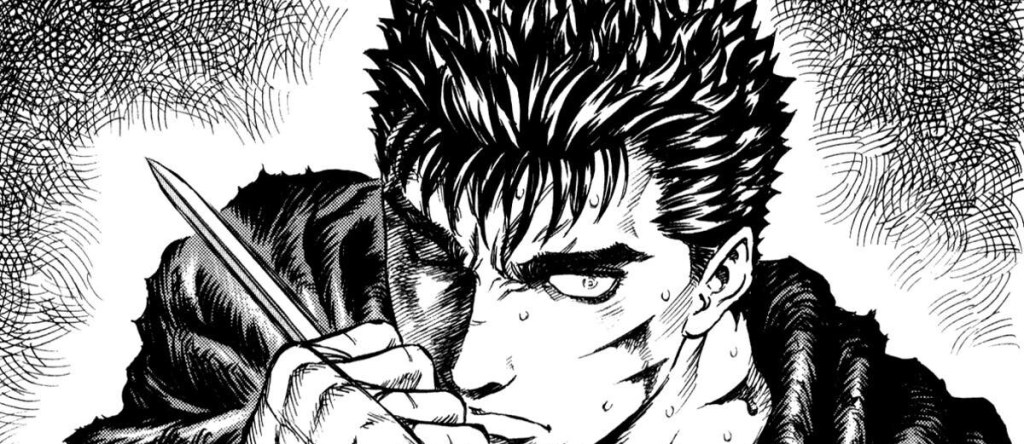
One of the most common — and tempting — mistakes when building characters is thinking that depth is measured by how much tragedy they endure. It’s easy to fall into that trap: the more they suffer, the darker they seem; the more pain they accumulate, the more “interesting” we think they are.
And of course, trauma works. It’s a powerful narrative tool. It connects us to the character, generates empathy and adds tension to the story. The problem comes when we treat it as the character’s destiny rather than their starting point.
Many novice writers — and not-so-novice ones — believe that making their characters suffer is enough to give them depth. Dead parents here, an unexpected betrayal there, a bit of gratuitous torture and there you go: “How deep, how brave, how complex.” But in reality, that’s not development. That’s just a tragic sticker album, like the ones I used to collect as a kid. Like my own personal trauma.
Real growth doesn’t come from accumulating wounds, but from how the character chooses to walk with them. How their decisions, their relationships and their worldview are altered by what they’ve lived through. Whether they get back up or not, and where they choose to go afterwards.
Suffering doesn’t automatically make anyone better — not a character, not a person. It can make them more interesting if you work on it. But without that evolution, trauma is nothing more than a broken puppet without a soul.
Trauma is not development

Trauma is undeniably a valid and powerful narrative tool. It can add depth, motivate the character, justify tough decisions and even become the engine that drives the entire story. No one is saying it’s wrong for your characters to suffer — in fact, it’s often necessary to make their conflicts believable and engaging.
The problem arises when we confuse that tool with the ultimate goal. Trauma is not a complete arc — it’s the starting point of one. It’s the wound, not the scar. A character who simply accumulates tragedies without learning or evolving is not deep: they’re a tragic puppet designed to provoke a “poor thing” from the reader, and little else.
Unfortunately, this is very common. You only have to look at how many characters authors fill with orphanhoods, torture, betrayals and disasters just so they seem “dark,” “bold” or “interesting.” And yes, they might get an initial reaction from the reader, but it rarely lasts. When a character does nothing with their pain — when they don’t change or make new decisions because of it — they become flat. And sometimes even ridiculous, because it feels like they only exist to be a display of gratuitous suffering.
So before you keep throwing tragedies at your protagonist to make them look profound, ask yourself: what do they do with them? Because that — not the catalogue of misfortunes — is where real development begins.
Good examples

To understand how to build development from trauma, it helps to look at characters who don’t just suffer, but do something with their suffering. These are characters whose evolution isn’t limited to collecting misfortunes — those wounds force them to make tough choices and transform, for better or worse.
A clear example is Frodo in The Lord of the Rings. Even though he completes his mission and destroys the Ring, he doesn’t come back the same. The journey changes him forever — the burden he carried leaves him broken and weary, unable to fit back into the Shire. He’s a hero who doesn’t emerge unscathed, and that makes him all the more relatable and profound.
In Harry Potter, the best examples aren’t necessarily the titular protagonist, but those around him. Hermione, for instance, makes incredibly hard decisions to protect the people she loves — even at the cost of her own well-being — like erasing her parents’ memories to keep them safe. That choice shows both her maturity and her pain, making it clear how much she’s grown since her first year at Hogwarts — though the films don’t even begin to touch the morally dubious choices she makes, like what she does to Rita Skeeter.
Ron also goes through notable development. He struggles with insecurity, with the fear of always being “the second” in Harry’s shadow, with feeling inadequate. But little by little he gains confidence and proves his worth not just in combat, but in his ability to support others.
These characters are memorable not for how much they suffer, but for how they respond to it — and who they become in the end.
Bad examples
For every good example of development, we also find bad ones — probably far more. Characters who pile up tragedies as if they were medals, but whose wounds neither transform nor evolve them. Their misfortunes are more like decorations meant to give them a “dark” or “deep” vibe than a real engine for their narrative arc.
Kirtash in The Idhun Chronicles is a clear case. His story is full of pain and dilemmas — ripped from his world, turned into an assassin, torn between two natures. Yet none of this truly changes him. From start to finish, he remains the same handsome, deadly and brooding boy, just with more scars. He never truly reconciles with his inner conflict nor undergoes emotional transformation. He’s just “there” to complete the love triangle with Victoria.
The same applies to the already-mentioned Harry Potter. Although his childhood is terrible, and he loses many loved ones throughout the books, his initial trauma is practically resolved in the first volume. From then on, the tragedies he endures barely affect his character. Harry remains “the chosen one” — brave and stubborn — but without a deep emotional arc that forces him to question who he is or what he wants to become. He has a few adolescent outbursts of anger, and that’s about it.
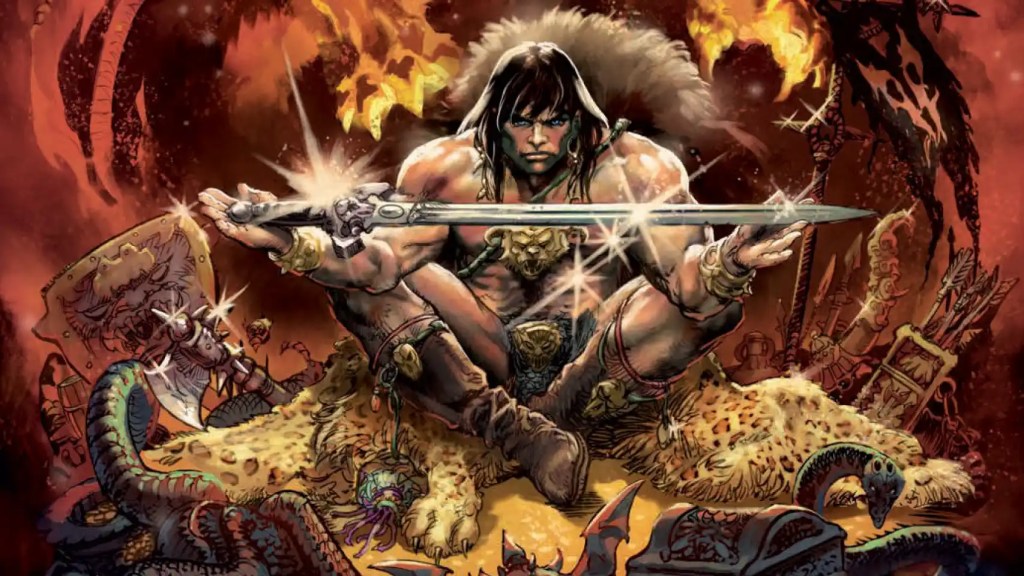
Conan the Barbarian is another example. He is the archetype of the strong, cunning and pragmatic warrior. His stories are more episodic than evolutionary — he already starts out almost perfect at what he does (strength, wit, courage) and doesn’t change much. Each adventure merely reaffirms his character rather than transforming it.
And a topic I’ll tackle in another post is when development does exist but is poorly executed or nonsensical. An example of this is Luke Skywalker in Star Wars: Episode VII. After redeeming Darth Vader, facing the Empire and showing unwavering faith even in the darkest moments, it’s hard to believe he would end up exiled and broken by guilt, without trying to bring Ben Solo back. If he managed to save his father, bringing back Ben should have been child’s play. On top of that, all his bitterness and retreat happen off-screen and are never satisfactorily explained. It doesn’t feel like a natural or coherent evolution of the character we knew — rather a sudden change to serve needs unrelated to his narrative arc.
In all these cases, trauma doesn’t create authentic development — it’s just set dressing, with no real weight on the character’s evolution.
In summary
Don’t make your characters suffer just so they seem deeper, edgier or more provocative. Burdening them with tragedies simply to give them a dark or complex aura doesn’t work if that pain doesn’t actually move them. Scars may make them interesting at first glance, but what truly makes them memorable is what they do with them afterwards.
Trauma is just the beginning — it’s not the end.
 Dice and Chronicles
Leave a comment