
Great Villains. Better Heroes.

It’s no surprise if I say that, in a large percentage of cases, the villain is the best part of fantasy stories. A being so vile that they endanger an entire city, a country, or even a whole world. Some even threaten entire timelines or universes.
It’s a threat to stability and peace that often sparks the debate over whether the villain was always this way or if power corrupted them, but that’s a discussion for another time. We’re here to talk about why in works of fiction, mainly fantasy, the villain puts our heroes in check, but always ends up losing.
Magnificent Heroes or Lucky Fools?

In fantasy stories, villains are usually intelligent, calculating, with plans so twisted you’d need a master’s degree in infernal engineering to understand them. They know what they want, they know how to get it, and they have centuries, or even millennia in some cases, of advantage over the poor hero of the moment who, to make matters worse, can’t even tie his boots without the mentor’s help. And yet, they lose. Always.
Think about it.
The Dark Lord who has been moving pieces on a cosmic chessboard for a thousand years ends up defeated by a farm boy with a borrowed sword and a couple of friends, just like in The Lord of the Rings. Sauron, the Lord of Mordor, Morgoth’s lieutenant and the one who carried on his work for two Ages, loses because a tiny hobbit and a gardener have more determination than his entire army of orcs. He doesn’t even realize the Ring is about to be destroyed. In fact, he has one job: watch over his own ring. He doesn’t.
He loses.
Or in Harry Potter. Voldemort, the most feared dark wizard of all time, invincible, with hidden horcruxes and a network of fanatic followers who terrorized both the magical and non-magical worlds, twice, loses to a bunch of school kids who use the same three spells across seven books. Kids who, at the very last moment, very conveniently, stumble upon the one thing they needed to bring down a plan that had been brewing for at least a year.
He loses too.
And this doesn’t happen only in fantasy. In the movie Law Abiding Citizen, for example, Clyde Shelton spends years planning his perfect revenge. Every move is calculated, every trap flawless. He studies, plans, designs, and executes. The story makes you sympathize and even empathize with him and his situation. A villain mistaken for a false public hero who, for an hour and a half, is the best player on the board… until suddenly, the script needs the real hero, the flawless lawyer and representative of justice, to win. And so, a crack appears in his plan. A crack that made no sense before but conveniently serves to make the message clear: “evil cannot win.”
This raises a question: Do heroes win because they’re better than the villains, or do they win because they’re supposed to?
“The Dark Lord who has been moving pieces on a cosmic chessboard for a thousand years ends up defeated by a farm boy with a borrowed sword and a couple of friends.”
“If you kill me…”
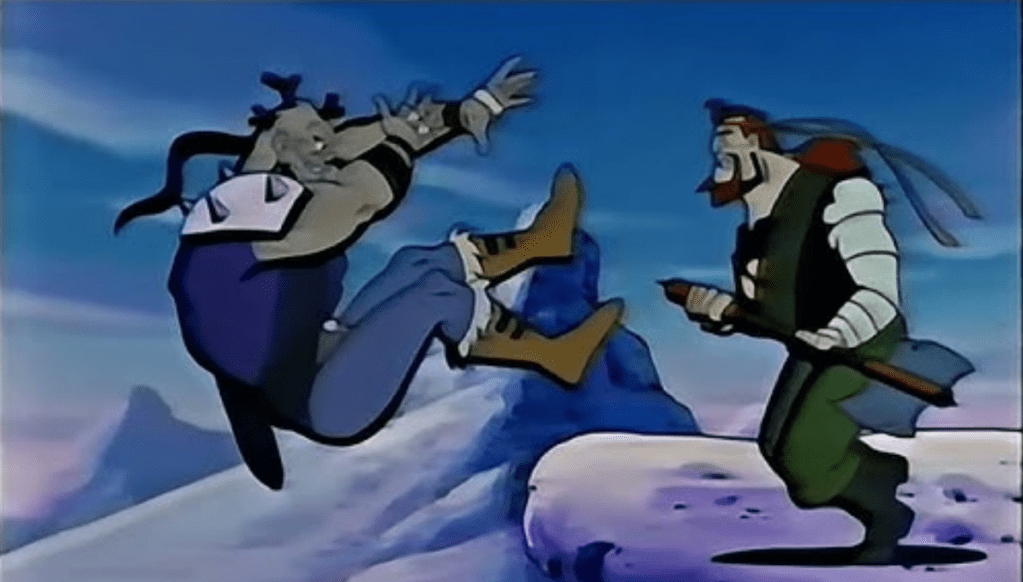
And then there’s this cliché. A line that drives me crazy every time I read or hear it. The one the villain says when he seems defeated, but there’s still a book or a saga left for a second round where the hero will regret his decision to let him live.
“If you kill me, you’re no better than me.”
Excuse you? I wasn’t the one who decimated the northern regions. I certainly wasn’t the one who used men, women, and children to extract the precious material you needed to build your army and threaten all the kingdoms. And I most definitely wasn’t the one who personally severed dozens of prisoners’ heads in your territories. Of course I’ll be better than you. I’ll be ridding the world of your vile presence, which, after all, was the whole point of this year of tragedy in the first place.
No.
The hero always wins without lowering himself to the enemy’s level. He doesn’t fight violence with violence because that’s for degenerates. The heroes, the true great heroes, the ones who carry the banner of justice, always win through the “power of friendship.” The journey is what makes them strong and morally superior to the villain.
A villain who, after mercilessly executing the heroes’ parents before their eyes and bringing entire empires to ruin, loses because his lieutenant, someone clearly almost worse than him, turns out to be a traitor somewhere over the sixteen hundred pages of the trilogy, but no one knew. Or he loses because he happens to be allergic to a virus he wasn’t immune to after spending a thousand years buried underground.
“The hero always wins without lowering himself to the enemy’s level. He doesn’t fight violence with violence because that’s for degenerates.”
So, why then?
Because that’s fiction. It’s designed to make it clear that darkness, no matter how strong it seems, always loses in the end. Not because it makes sense. Not because the hero is smarter, stronger, or better prepared than the villain. But because that’s how it’s written. Because evil cannot win in the stories we choose to tell.
And that’s fine. But it’s also worth remembering that out here, in reality, no one writes the ending for us. Here, the villains don’t have to fail at the last minute. Here, evil wins more often than we’d like.
That’s why fiction isn’t a mirror. Evil doesn’t win because it’s forbidden in fiction.
 Dice and Chronicles
Leave a comment