Daggerheart: A New Challenger In The Fantasy TTRPG Scene
With less than a month to go before the official release (May 20) of this new TTRPG that’s about to shake the market, it’s time to kick off our coverage of a game that I hope will be a huge success — and one around which we can build a fantastic community to share and grow together.
Until that moment arrives, everything I’ll be covering in this post (and others to come) will be based on the open playtest materials from less than a year ago — a playtest phase in which I actively participated from start to finish.
First things first: What is Daggerheart?
If we read directly from their official website:
“Daggerheart is a fantasy tabletop roleplaying game of brave heroics and vibrant worlds that are built together with your gaming group. Create a shared story with your adventuring party, and shape your world through rich, long-term campaign play.“
Digging a little deeper, Daggerheart is a new tabletop roleplaying game (TTRPG, for the hardcore nerds among us) developed by Darrington Press — the publishing arm of the Critical Role team — with the goal of offering a heroic fantasy experience that’s more emotional, cinematic, accessible, and flexible than traditional systems.
Its core mechanic revolves around rolling two twelve-sided dice (2d12) for most actions — a system designed to balance risk and reward in a highly narrative way.
As for the rules, it’s not as rigid as some systems where there are rules for things like grabbing an apple from a tree — but it’s also not so loose that anything goes without structure. It strikes a weird middle ground that, for me, could be what determines whether the game ultimately succeeds or struggles
Daggerheart doesn’t try to reinvent the wheel like so many other systems that promise to “change everything.” It simply strengthens the most beautiful part of tabletop RPGs: feeling like you’re part of a story with your friends at the table.
So, if you’re looking for a system that’s quick to learn, emotionally powerful, and deep enough to sustain long-term campaigns, get ready — because Daggerheart is coming in hot.
“Daggerheart doesn’t try to reinvent the wheel – it simply wants you to live the best story possible.“
Who’s Behind Daggerheart?
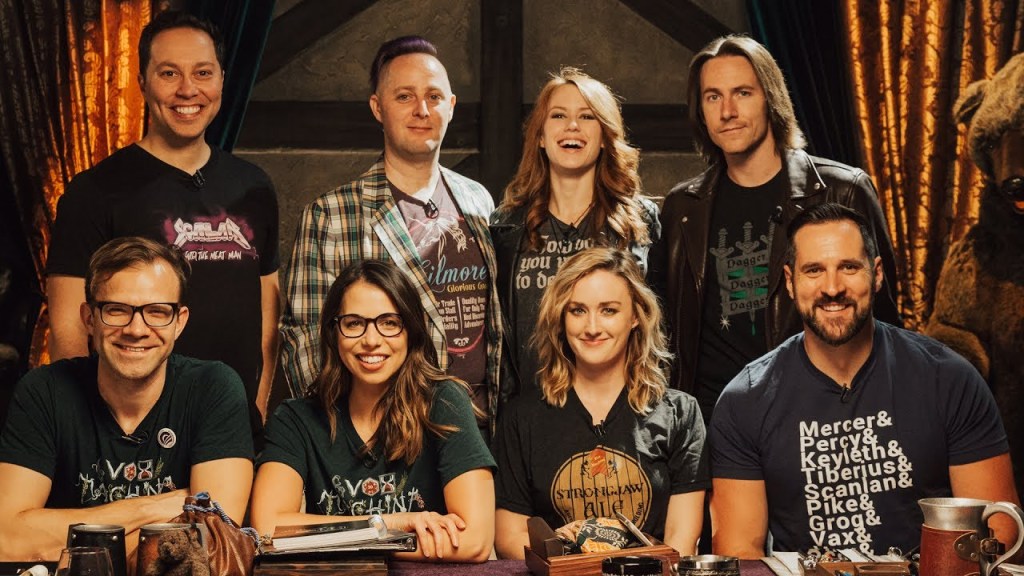
Daggerheart isn’t the product of a bunch of hobbyists who stumbled into game design. It’s the creation of Darrington Press, the publishing arm founded by the team behind Critical Role — one of the biggest (and most beloved) forces in the tabletop RPG world today.
For those who might not know them yet, Critical Role is a group of professional voice actors (led by Matthew Mercer) who decided to livestream their Dungeons & Dragons games about ten years ago.
The result?
A worldwide phenomenon that completely changed how people view tabletop RPGs.
Darrington Press was born as the publishing branch of that team, with the mission of creating original games that carried the same narrative, emotional, and epic spirit that defines their campaigns. They’ve already released Candela Obscura and other board games — but Daggerheart is, by far, their most ambitious project in the TTRPG space.
The figure of Matthew Mercer, as GM for most of their productions, acts almost like a seal of quality. Not because he magically touches everything (although, honestly, sometimes it feels like he does), but because his approach to RPGs has always put story and character first — and Daggerheart carries that philosophy right from page one.
So if you were looking for reassurance that this system was built with care, experience, and an overwhelming love for tabletop storytelling — you’ve got it.
Why Is Everyone So Excited?
From the moment Daggerheart was announced, one thing became clear: it’s not just another D&D clone, nor an experimental indie game with no clear direction. It’s a serious, fresh, and long-term proposal — and in a market saturated with tabletop RPGs, that says a lot.
One of its biggest strengths is how it combines simplicity with narrative depth. Players roll 2d12, which is already a big contrast from the classic d20 used in D&D or the percentile system in Call of Cthulhu. The GM does use a d20, but it’s not about which is better — it’s about fluid mechanics designed to make combat and social encounters feel faster and more dynamic. You roll, interpret, narrate. It’s pure story muscle with just the right amount of mechanics.
Another huge win: Daggerheart is built for accessibility.
Character creation is fast and straightforward. Core mechanics (hope, stress, stats, skills) are explained in a way that anyone — even total newcomers — can jump in and play. You don’t need to be a veteran to feel like you belong at the table from session one.
And in a hobby that desperately needs new blood, that’s a blessing.
But that accessibility can also be a double-edged sword.
Given that the system was born from the Critical Role crew, it leans heavily into roleplay and narrative. In Daggerheart, emotions aren’t just flavor — they’re part of the actual mechanics. How your characters feel, how they emotionally react to the consequences of their actions — that’s core to the game’s narrative development. It’s not mandatory, but it’s clearly encouraged for the full experience.
It’s not just about rolling dice to see if you slay the monster. It’s about asking how that failure affects your character. What changes inside them? Which way is their soul leaning?
This opens up a type of storytelling and character development that, let’s be honest, most traditional systems don’t naturally support.
And if that’s not your vibe — if you’re into more structured, rule-heavy games — Daggerheart’s open, interpretative nature might frustrate you.
But here’s the beauty of it: Daggerheart, like any good system, gives you space to shape your own story. It’s solid enough to support long, epic campaigns, but flexible enough to let you improvise, adapt, and build your own world around it.
Its high-fantasy framework gives it an immediate boost — easy to recognize, easy to slot your current campaign into. Even if what we’ve seen so far from Critical Role leans toward bright, colorful storytelling, they’ve already confirmed darker genres will have their place too.
Want gritty political intrigue? You can.
Want a lighthearted romp with unlikely heroes? Yup.
Want an emotional epic where redemption matters more than swordplay? It’s built for that.
And you won’t have to hack or break the system to get there.
That’s why Daggerheart is getting so much buzz — and why it deserves it.
Because it doesn’t just offer a new system.
It offers a new way to live the stories we want to tell.
“In Daggerheart, it’s not just about whether you win or lose — it’s about how it makes you feel“
What Makes the System Unique
- The 2d12 System
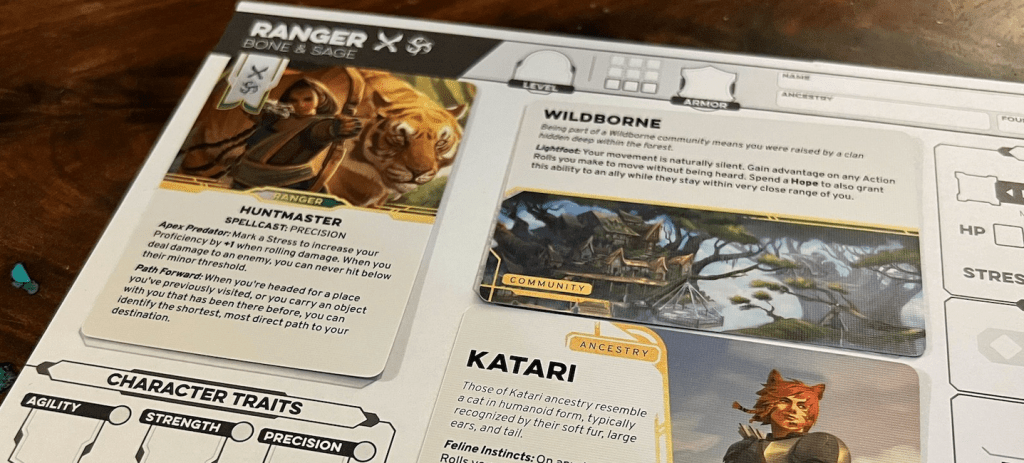
Unlike its most direct competitor, Daggerheart doesn’t just use two twelve-sided dice (2d12) for a simple “success vs. failure” mechanic — it builds a powerful narrative layer on top of that. Depending on which of the two dice you’ve assigned as Hope or Fear, and which one rolls higher, the tone of the story shifts in one direction or the other.
“But Alejandro,” you might say, “isn’t that basically the same as any other system where a success means things go well and a failure means things go badly?” And sure, at first glance, Daggerheart tracks success/failure much like any other game — just with extra steps.
But here’s the catch: you can’t overlook the narrative weight behind those steps.
In D&D, actions are resolved with a single d20. You roll, add modifiers, and compare it against a DC set by the GM. If you meet or exceed the DC, you succeed. If not, you fail. There are a few special mechanics — like a natural 20 being a critical success, or a natural 1 being a critical fail — but it’s mostly binary: success or failure.
In Daggerheart, though, you roll 2d12 called Duality Dice — one for Hope, one for Fear. - So what’s the real difference?
- Emotional Narrative Integration:
- It’s not just about whether you succeed or fail — it’s about how you got there. The tone of the story shifts based on whether Hope or Fear takes the lead.
- Metagame Mechanics:
- Each roll doesn’t just resolve an action — it feeds the ongoing emotional energy of the game. Hope empowers the players; Fear gives tools to the GM. It’s a tangible system that influences future events.
- Greater Emotional Granularity:
- Where D&D offers only a binary outcome, Daggerheart tracks the emotional context of each action, giving players and GMs mechanical tools to build tone and drama — not just improvise it.
- Accessible Critical Successes:
- TUsing two dice makes critical successes more common and natural than relying on a single, elusive natural 20.
- TUsing two dice makes critical successes more common and natural than relying on a single, elusive natural 20.
- Emotional Narrative Integration:
- Turnless Combat
In Daggerheart, there’s no initiative, no rounds, no rigid turn order. This radically sets it apart from systems like D&D, where strict initiative order dictates combat pacing.
Instead, combat flows narratively — moment to moment — as if it were a natural part of roleplaying. That means:- Greater narrative flexibility – Players can act more organically without waiting for their “turn.”
- More realistic teamwork – Characters can collaborate fluidly, chaining actions and reactions.
- Emotional immediacy – Because emotions (Hope/Fear) matter mechanically, acting in sync with how the scene evolves is easier and more immersive.
- Cinematic pacing – Action scenes feel more like dynamic movie sequences than turn-based chess battles.
- It’s yet another example of how important a dynamic, almost interruption-free game flow is in Daggerheart. Transitions between social interactions and combat are as smooth as a star-wipe in a movie.
- Ease of Access + Depth of Potential
One of Daggerheart’s greatest achievements is its perfect balance between two often clashing ideas: accessibility for new players and depth for long-form campaigns.
On one hand, the system is incredibly beginner-friendly.
Character creation is fast: pick a class, assign traits, choose a background, and go. No need to study hundreds of pages or memorize obscure rules. Core concepts — Hope, Fear, Stress, Damage, etc. — are explained clearly and introduced gradually.
The core mechanic — rolling 2d12 and determining which energy (Hope or Fear) dominates — adds narrative flavor without adding mechanical complexity.
On the other hand, Daggerheart is built for long-haul stories.
Its mechanics are designed to evolve over time, growing in tone, emotional weight, and narrative complexity. Features like Experiences allow players to define and reinterpret their characters’ arcs. The dynamic use of Hope/Fear as metacurrency fuels story momentum.
And its fiction-first philosophy — where narrative takes precedence over rigid rules — empowers groups to craft epic sagas without breaking the system.
Casual four-session games? Absolutely.
Multi-year campaigns? You’re covered.
In short: Daggerheart is easy to pick up — and deep enough to stay with.
“Fights flow like a movie, not like a chessboard.“
Personal opinion / Mini reflection
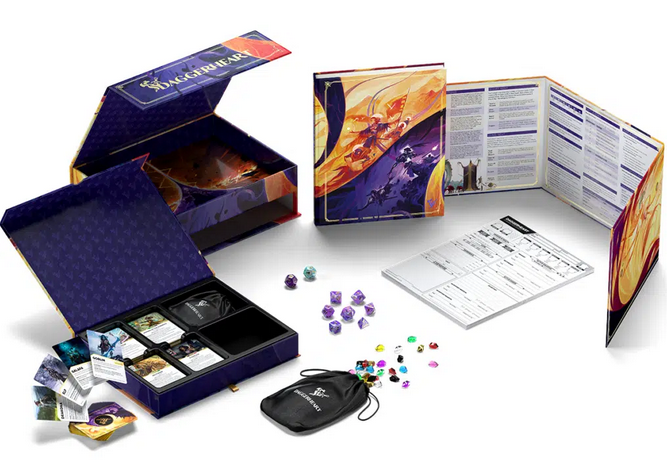
First of all: sorry for such a long post, but it’s the first of this series where we’ll be covering the game, and I think it’s a good starting point — even if the information is a bit overwhelming. We’ll break it down and dive deeper in future posts.
I think I can sum up my opinion in a single sentence: Daggerheart is a game for theatre kids — for people who love storytelling and roleplaying.
Its accessibility for new players is what makes it so attractive, but this openness and the free interpretation of tools like Experiences might put off more experienced players or those looking for stricter, rule-heavy systems.
The game has a huge advantage: its creators are part of one of the biggest TTRPG companies in the world. Their reach touches the hearts of millions of players, and the fact that it uses the high fantasy framework ensures an easy comparison — and even migration — from ongoing campaigns.
But (and this is a big one for me, even if I know it’s not a priority for the creators) — there’s no news yet about a Spanish translation or localization.
The open beta phase was fun, they listened to community feedback, and they adjusted accordingly. And I plan to give this game a lot of attention once it arrives at my house on May 20th. After that, we’ll decide which system to stick with — but Daggerheart has a lot of potential to claim a big part of my table time.
Had you heard of Daggerheart before? Did you preorder it? Are you excited to give it a try?
I’ve got my dice ready. What about you?
 Dice and Chronicles
Leave a comment